Friday, May 20, 2011

Peculiar Prague

This post is dedicated to the cool, brilliant, wacky or just plain strange that can be seen in Prague.

One of the first things I noticed, was the sidewalks. Or rather, the patterns on the sidewalks. All over the old town, different patterns were marked on the cobblestones. These are just some of the ones I noticed.


Like any major European city, Prague is filled with all kinds of statues.
We'll begin with a seated guy. Unfortunately for him, he is facing away from Charles Bridge for some reason.


A statue of famous Czech composer Antonin Dvorak stands in front of the Prague Concert Hall. Not the building behind him. He, unlike the lazy seated guy, is actually facing the right way.

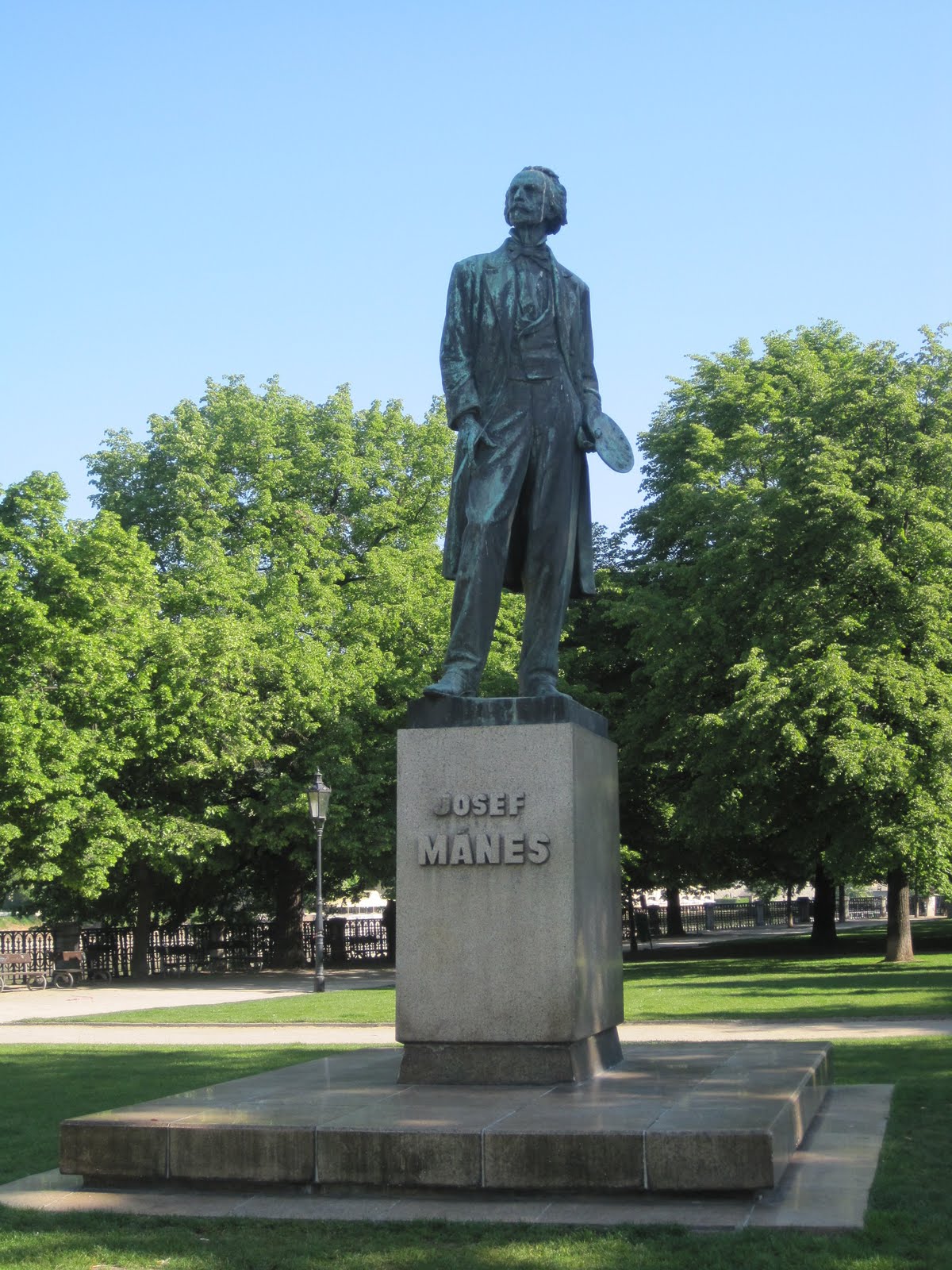
Keeping him company a block away, is a statue of Josef Manes, a Czech painter who was also the creator of the images of the months on the astronomical clock.
A very catty lady.

Two very "cool" figures near a metro entrance.

A girl close to the Palace Gardens.

Old Winston Churchill, close to the British Embassy.

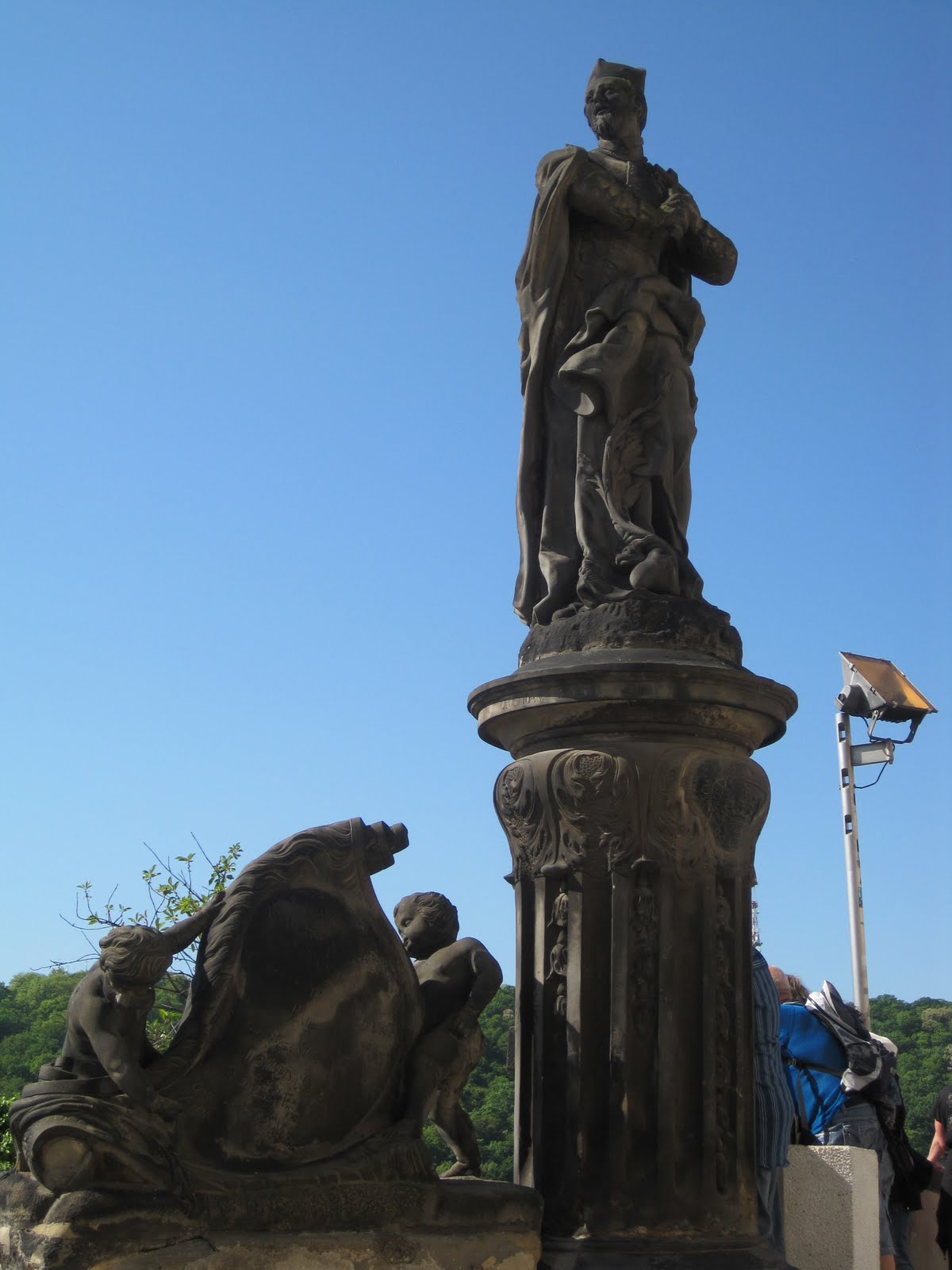

Slaying a dragon in front of the Cathedral.

This guy, at the Strahov Monastery, possible has the best seat in the house on a warm day.


I don't know if it is just a coincidence, or whether he is a relative of the face on the wall. What do you think?

There are many statues all over that have deer with crosses between their horns. At the moment, I have no idea what it signifies, but could it have anything to do with Jägermeister?

He seems to feel a bit blue. Perhaps he should lie down like the guy in the back.

This interesting statue depicts novelist Franz Kafka, riding on the back of a headless man.

A very musical fountain

And in front of the National Museum, giving the modern square its name, stands the statue of the mounted St Wenceslas, Patron Saint of Bohemia. I really thought I had a close up photo somewhere, but I couldn't find it.


The more famous statues are of course, the ones lining the Charles Bridge. There are hordes of them. I thought it best not to upload them all.


As you can see, many believe rubbing some of those statues will bring good luck.

Nice and shiny from all the rubbing. Reminded me of St. Peter's foot in the Vatican.


Then there are the bizarre statues of controversial Czech sculptor David Cerny. Unfortunately, I only came across a couple of his statues and after researching them when I got home, I found a list of weird sculptures and statues he created. Fortunately, I found the "better" ones and not the "inappropriate" ones.

A man hanging by one hand. (Thank you captain obvious.)

Yes. I might have been too lazy to get closer to the tower if I had known before hand that there were babies crawling up and down the pillars. Look closer, you can see them: Those are not ants. As it was, I only took a random photo of the tower and, luckily, manage to capture a very far off peek at a weird concept.

In a tribute to Kafka, Cerny turned the Czech nation's most potent nationalist symbol on its head, literally. This is why I had hoped I had a closer/better photo of the statue in Wenceslas Square.

Of course, no post about statues in Prague will be complete, without the Golem itself.

Whoops! That's not the golem. This is.

I am a big fan of the Discworld novels. Big. I guess that Sir Pratchett's idea for his golems, beings made of clay with words of power/instructions (magic writing placed in their heads), stemmed from the Jewish folklore. So I just had to buy a golem figurine to join my swamp dragon...I mean Krakow Dragon...to be placed in front of my Discworld collection back home in S.A.
Did I mention that I was also reading a Discworld novel during this trip?


Last, but not least, I present to you the Dancing House. Originally it was called Fred and Ginger after Fred Astaire and Ginger Rogers, because it was designed to resemble a pair of dancers. Typically, some also call it the Drunken House.


And there you have it. A short...well...maybe medium...overview of my trip to Prague, but not the end of my Eastern Europe Phase 2. Yes, there is one more post left of this trip.

Till next time, Njoy.

Wednesday, May 18, 2011

Eastern Europe Phase 2b

Prague. The city of bridges, cathedrals, towers, church domes and more.

But before I get to Prague, I just want to relate what happened at Krakow Train Station.
I always hear about friends or family travelling and meeting fellow South Africans at random places. For the first time, I can also say that it happened to me.
I am actually so used to either not understanding what people are saying around me, or listening in English, that it took me several minutes to realise the couple sitting behind me on the bench was speaking Afrikaans! I think they were as shocked as I was.
It was really great, even for so short a time, to almost feel as if I was home.

The sleeper train itself was another story, however. Considering I got up that morning at 4:30, I thought I'd be sleeping like a rock the ten hours to Prague, but between being a suspicious South African worrying about his passport and belongings all the time, and the train's rough stopping and starting at numerous stations on the way, I didn't get as much shut-eye as I would've liked.

Luckily, I had more than enough to keep me entertained in Prague.
My arrival on Sunday morning, coincided with the Volkswagen Prague Marathon, which I discovered by following scores of men, woman and children in running gear to the Old Town Square: where the race started and finished.


Because of this, and the fact that the race course covers a lot of tourist areas, like the Old Town Square and Charles Bridge, I was really glad I had scheduled two days in Prague.
In my previous posts I tried to keep things in chronological order as much as possible, but today I'm going to sort it more into different categories. I'm also splitting my Prague visit into two posts.

Towers

Prague has many towers. The Following are just a few of them.
Close to the Municipal building is the Powder Tower. Originally known as the New Tower, it's gate was one of the 13 entrances into Old Prague in the 11th century. The tower itself was built in late 1400s and modelled on the Old Town Bridge Tower. The name change came after it was used to store gunpowder in the 1700s.
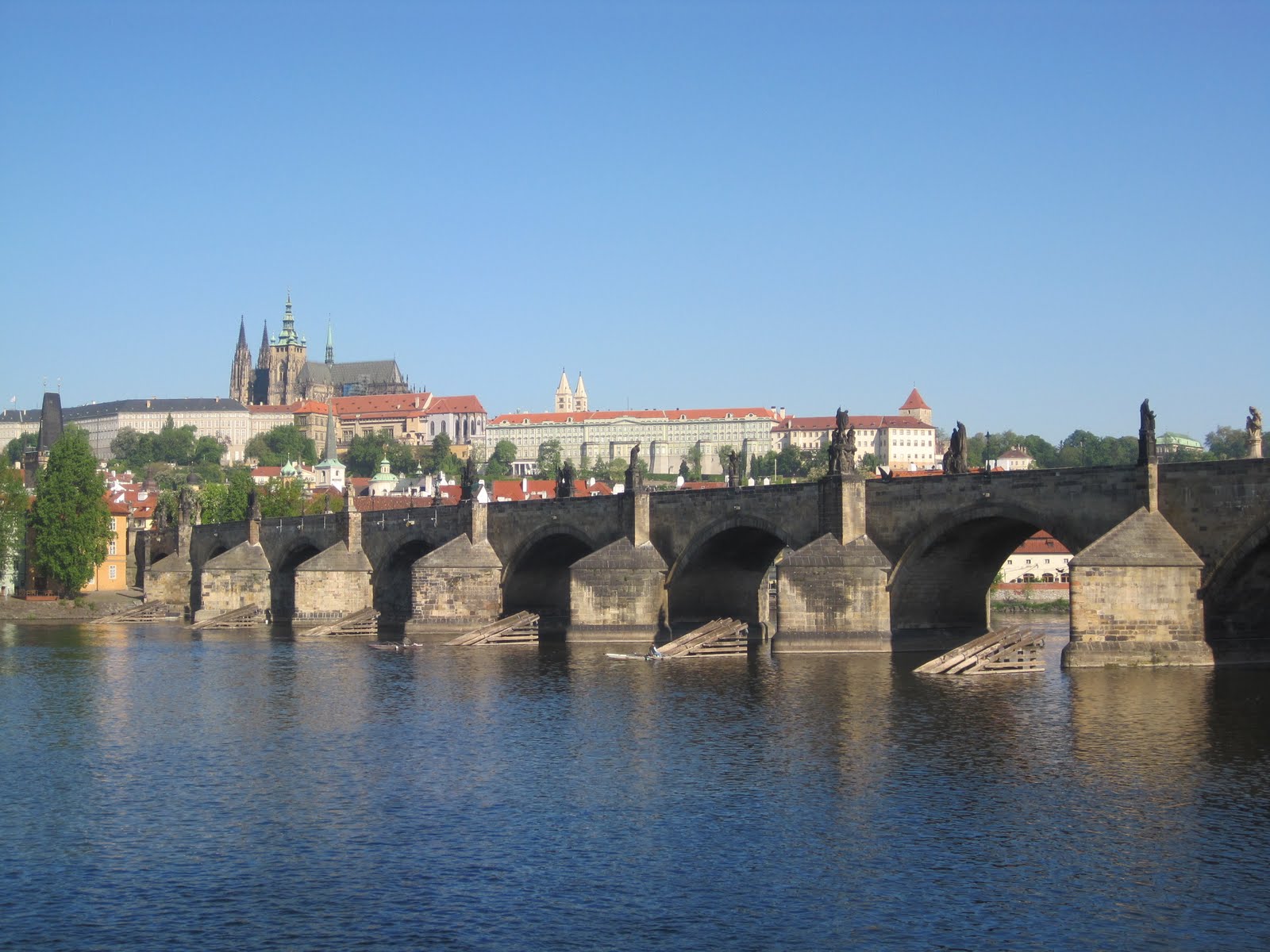
The Old Town Bridge Tower below, was built in 1300s and guards the side of Charles Bridge connecting to, you guessed it, the Old Town. Like most historically important towers in Prague, it retains a sooty look.

On the other end of Charles Bridge, you pass underneath the Lesser Town Bridge Tower. It is around 200 years younger than the Old Tower. The small tower to the left is the only remains of the original bridge that washed away in the 1300s.

The Jindrisska Tower was built in the 1400s, then rebuilt in the 1600s, 1700s and early 1800s, after being damaged by the Swedes, the Prussians and what was probably a very strong wind storm.

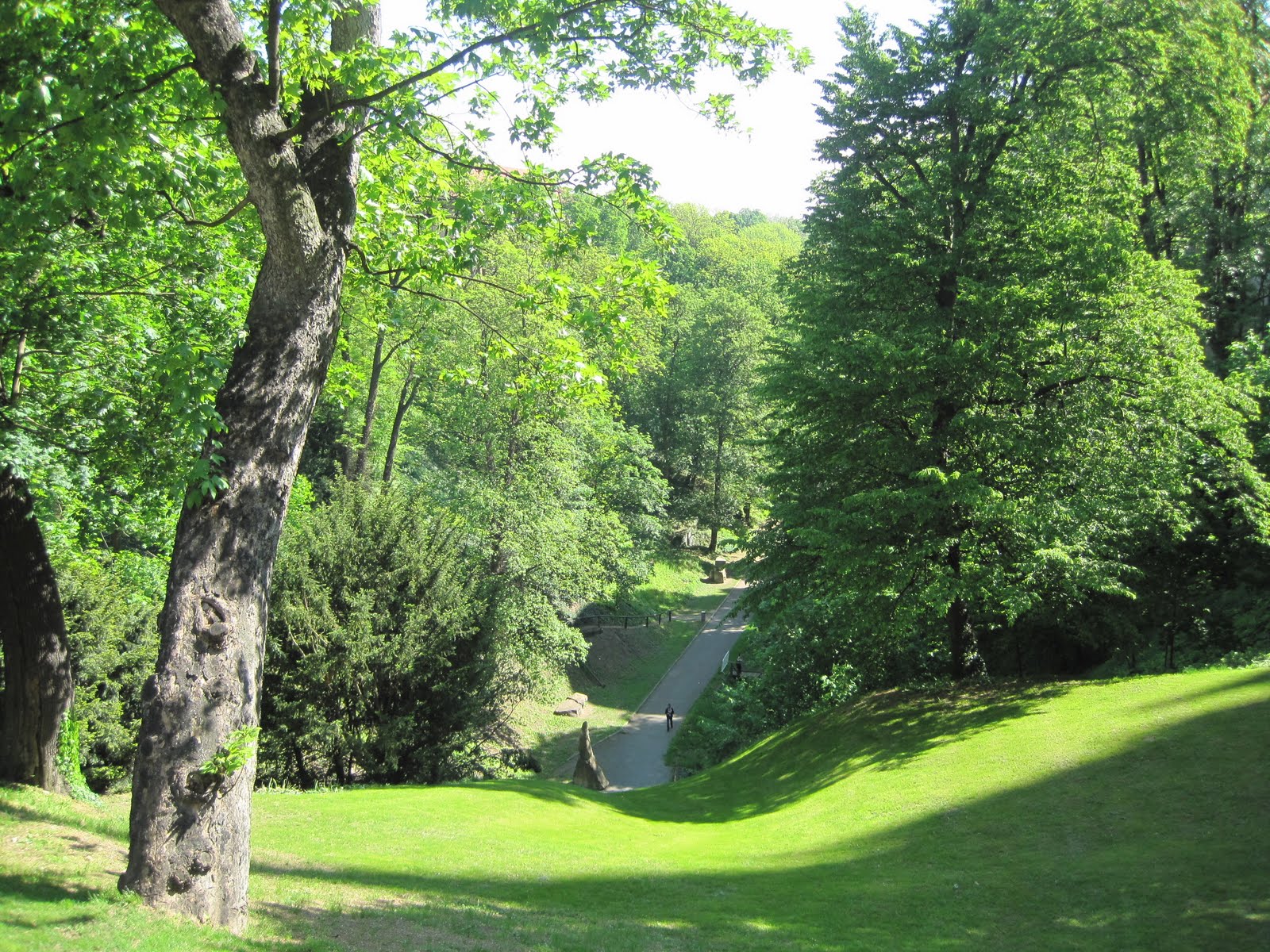
On Petrin Hill, the 60m Observation Tower (just visible far away on the left) was built in 1891 for the Jubilee Exhibition. It resembles a small Eiffel Tower. The landscaped gardens that dominate Petrin Hill also covers the quarries where much of the stone used to build many of the major sites were obtained.

The 15th century water tower below towers above the Manes Exhibition Hall, a visual arts venue with the Vltava River flowing underneath it.

They even have tower-like statues!

The main tower, of course, is the Town Hall Tower, which also has the astronomical clock dating from the 15th century on one side. It is the third oldest astronomical clock in the world, and the only one still working.

The clock consists of three main components:
The "walk of the apostles"; an hourly clockwork puppet show of the apostles marching and death ringing a bell. The two shutters with 5 stars each are where they appear.
The astronomical dial displaying the position of the sun and the moon, and the time.
A Calendar dial with medallions representing the different months


Religious Buildings

Prague also has a big selection of churches, basilicas, synagogues or temples. I'm not going to comment on ALL of them.
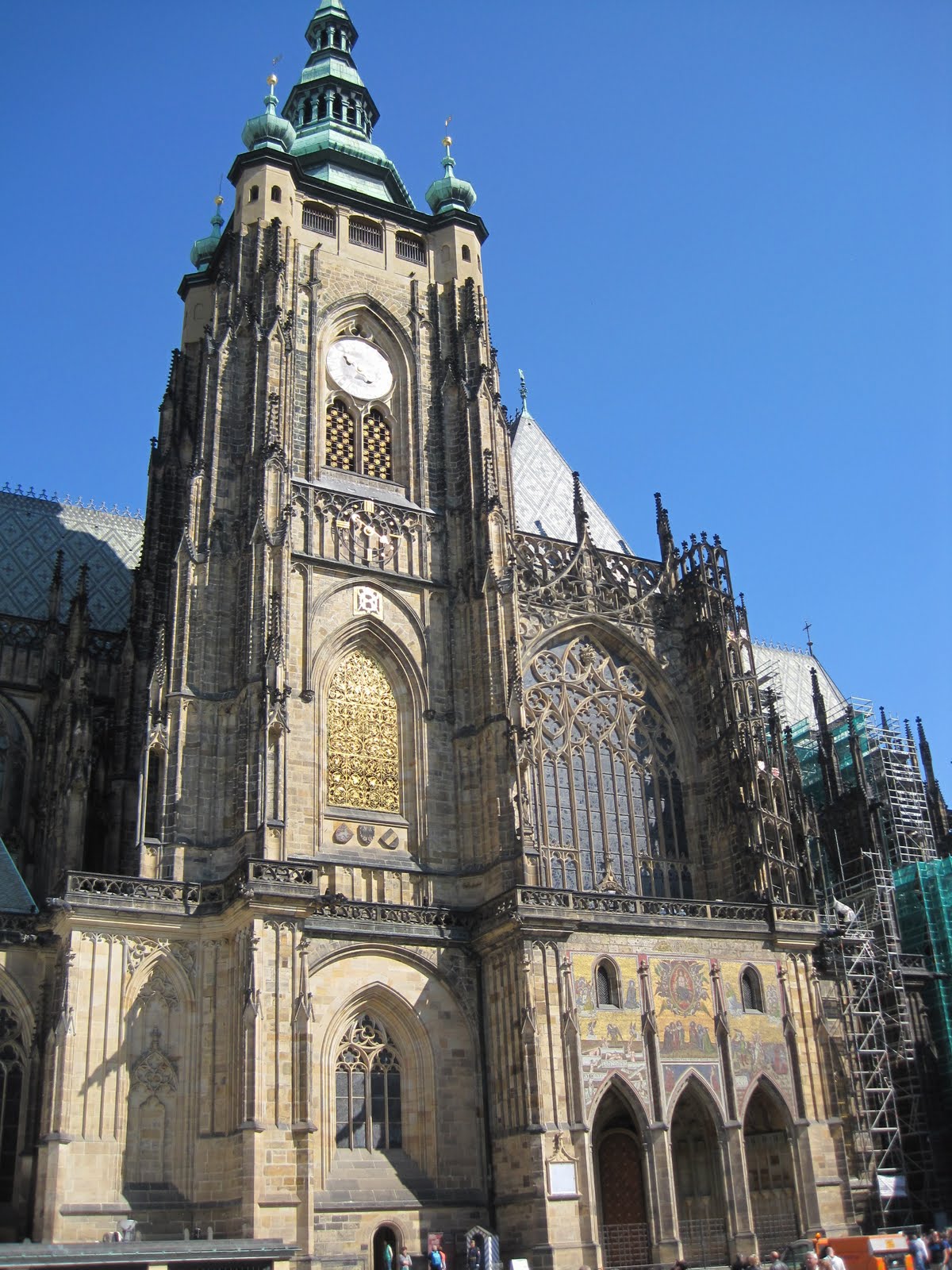
St. Vitus Cathedral is situated on the Palace Grounds. It is huge. Reminded me (in size) a lot of Cologne's cathedral.


At the old town square there are two main churches.
The Church of Our Lady Before Tyn is actually half hidden behind other buildings. To reach the main door, you pass through a short tunnel and enter a small courtyard. I can easily imagine traffic problems! But I am sure that there are other entrances open during services.

Then there is St. Nicholas Old Town Church, one of three St. Nicholas churches.

The second one is in the Lesser Town. I have no idea where the third one is, but I am sure I don't have a photo of it.

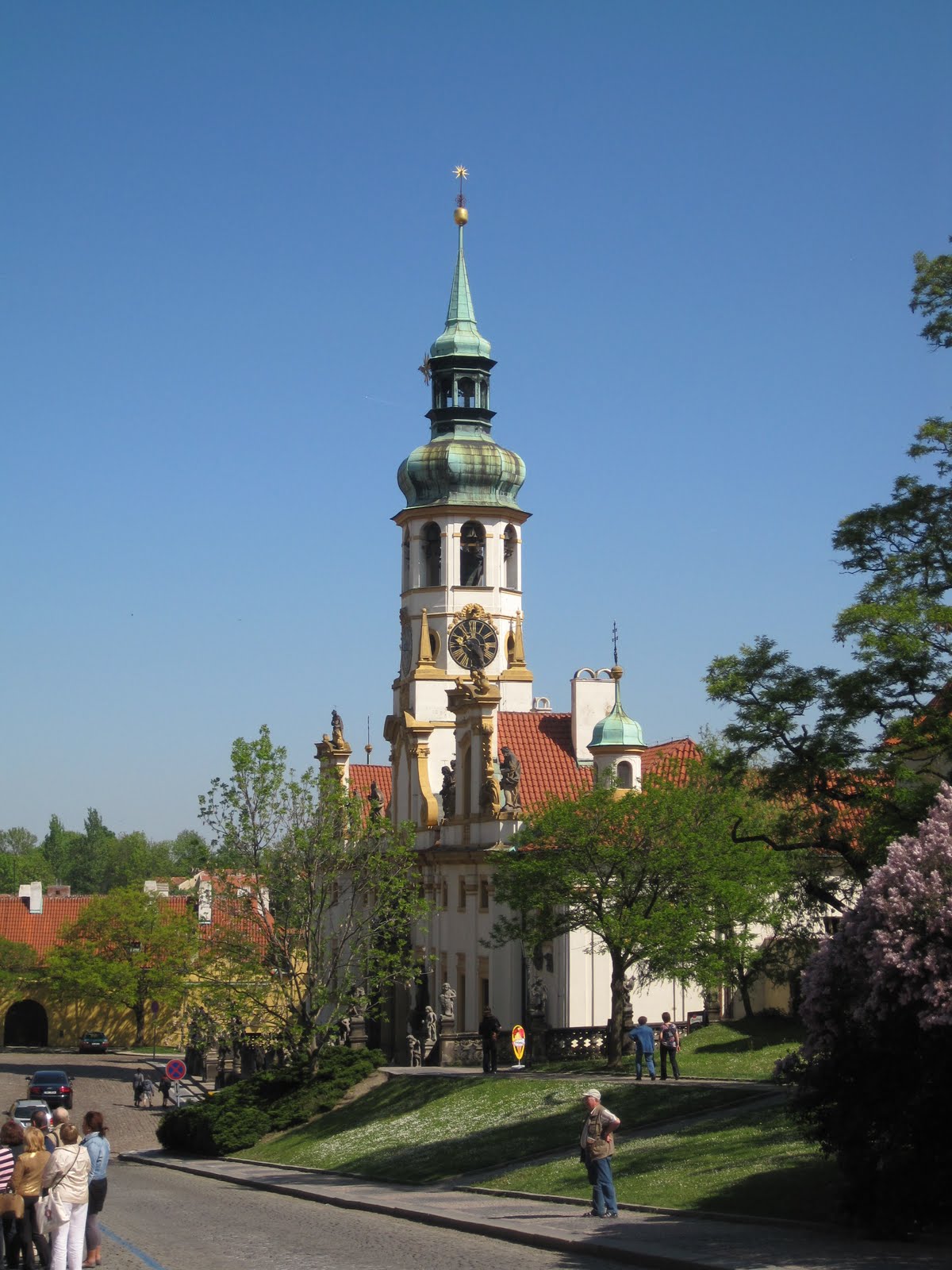
Close to the palace Loreta Church can be found. I really like it, except for the strange and numerous statues in front of it.


Some of the other religious buildings, as well as several in the Jewish Quarter, include:

Jerusalem Synagogue

Old New Synagogue. This synagogue features in the story of the Prague Golem.
According to Jewish folklore, a golem is an animated anthropomorphic being created from inanimate matter. In other words, something brought to live, made from non living things and having human characteristics and features. It was brought to live with a clay tablet, containing spells, that was inserted into its mouth.
The Prague Golem was created by Rabbi Löw to protect the Jews from anti-Semetic attacks. At first, the Golem did its duty perfectly, but as it grew stronger and stronger, it got uncontrollable and destructive. The Rabbi was in the Old New Synagogue singing Psalm 92 when he was interrupted and told about the golem destroying his home. He rushed out and removed the clay tablet, thereby "killing" the golem. The Rabbi then went back and sang the Psalm again, which is why, apparently, the Old New Synagogue is the only synagogue in the world where the Psalm is sung twice. Legend has it that the golem was then placed in the attic of the synagogue. Many believed this to be true, since the area was forbidden and the stairs removed, but when the synagogue was finally explored in modern times, no golem was found. This only served to deepen the mystery of the Golem of Prague, however.

Spanish Synagogue

St. George Basilica close to the Palace.

St. Martin in the Wall

And on top of Petrin Hill you can also find the Strahov Monastery, along with some great views over the old town.


Cultural

I'm going to finish this post with some of the important cultural buildings of Prague

First off, is the Prague Castle; the biggest ancient castle in the world.


Close by, is the weird Schwarzenbersky Palace.

As well as the Palace Gardens, which, unfortunately, doesn't allow photographs on the grounds so I had to make do from the street below and a bridge above.


The municipal building.

The Rudolfinum Concert Hall.

The new town square is lined with shops and restaurants and ends at the National Museum.


And of course, no photo collection of Prague will be complete without the famous Charles Bridge.


And now it's time to bring this long post to an end and say Goodnight!